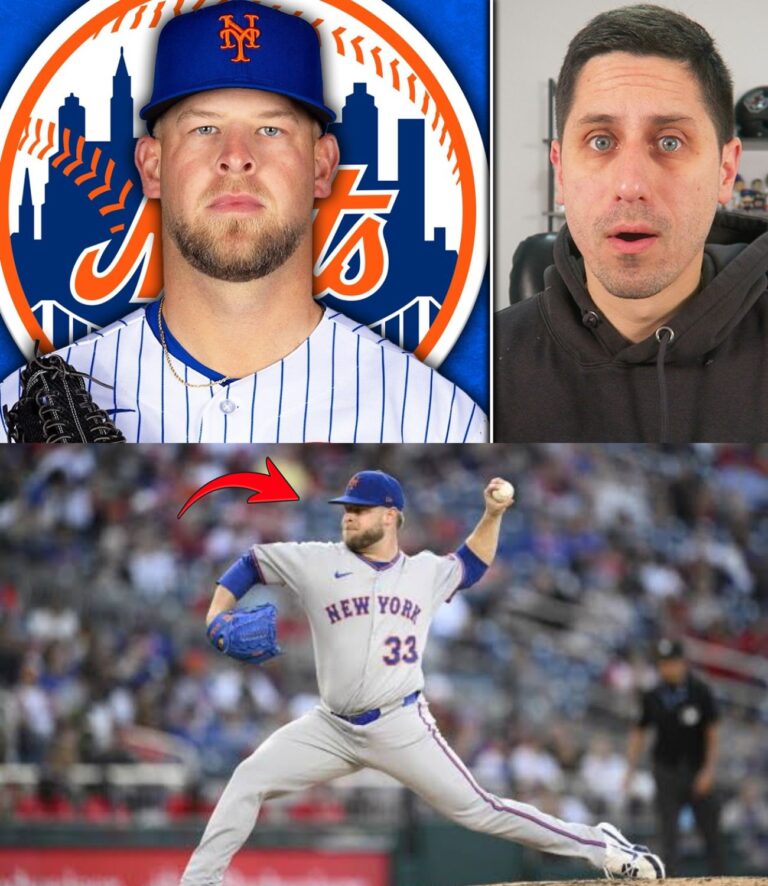
he Major League Baseball trade deadline is an unforgiving crucible where emotion, analytical valuation, and organizational philosophy collide under intense public scrutiny. For the New York Mets, the final countdown to July’s trade deadline has already triggered a wave of strategic retooling. Executives opened their deadline account by shipping veteran left-handed relief pitcher A.J. Minter to the Minnesota Twins in exchange for two fascinating minor league infielders: Double-A power slugger Billy Amick, who has blasted twenty-three home runs this season despite strikeout concerns, and nineteen-year-old contact specialist Bruin Agbayani, the son of beloved former Mets playoff hero Benny Agbayani. Yet, while fans debate the merits of bullpen exchanges, a far more monumental and intellectually captivating dilemma is unfolding behind closed doors in Flushing: Should the New York Mets trade twenty-four-year-old superstar catcher Francisco Alvarez?
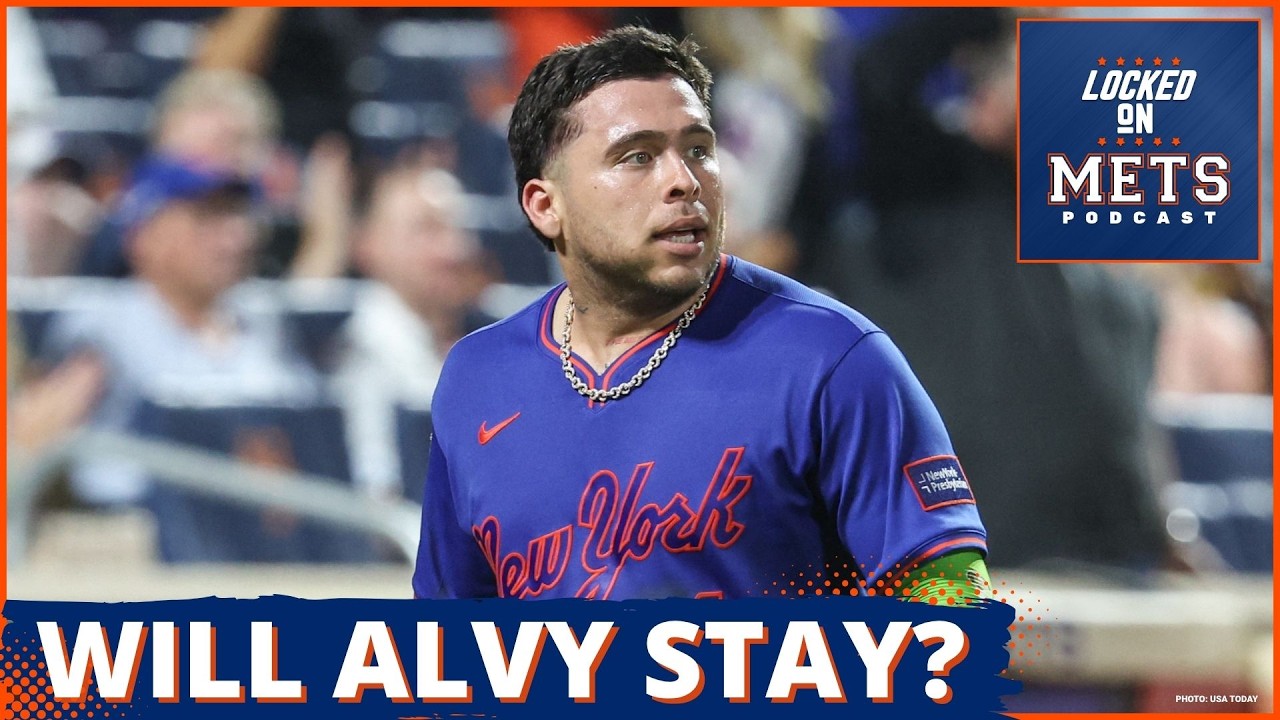
Across the baseball landscape, the catching market has undergone a dramatic, unexpected contraction that has suddenly elevated Alvarez into the most coveted offensive asset potentially available. Entering the midsummer stretch, industry evaluators anticipated a vibrant bazaar of backstops. Names like Oakland Athletics standout Shea Langeliers, Colorado Rockies power hitter Hunter Goodman, Baltimore Orioles cornerstone Adley Rutschman, and Minnesota Twins rental Ryan Jeffers were widely circulated in trade speculation. However, a rapid series of physical ailments and steep asking prices has frozen that market. Langeliers suffered a knee injury requiring season-ending surgery. Colorado removed Goodman from realistic consideration after demanding elite, untouchable farm assets—such as premier shortstop prospect Franklin Arias from Boston or consensus number-one overall prospect Theo Gillen from Tampa Bay. Rutschman is nursing a wrist injury while Baltimore remains entrenched in the American League East playoff chase, and Jeffers is too vital to Minnesota’s postseason aspirations to be auctioned off.
What remains on the trade market is a pedestrian collection of short-term upgrades and defensive specialists. Contenders searching for catching help are largely staring at Cincinnati Reds rental Tyler Stephenson, Oakland’s Jonah Heim, St. Louis Cardinals backups Pedro Pages and Ivan Herrera, or Miami Marlins catcher-first baseman Liam Hicks, who has been displaced behind the dish by rising prospect Joe Mack. In this landscape of scarcity, Francisco Alvarez stands alone as a generational trade chip. At just twenty-four years old and possessing three and a half years of remaining club control, Alvarez offers a rare combination of youth, defensive pedigree, and thunderous right-handed power in a market virtually devoid of impact right-handed bats.
The analytical argument for selling high on Alvarez is rooted in basic economics: when supply evaporates, valuation skyrockets. Over his last thirty games, Alvarez has reminded the entire league of his ceiling, slashing a robust .260 with a .357 on-base percentage, a .500 slugging percentage, and seven home runs—good for an elite .857 OPS. If a rival front office desperate for offensive punch decides to meet New York’s price, baseball executives estimate that Alvarez could command a historic return of at least two consensus top-100 prospects, and potentially more. For a front office continuously seeking to infuse its farm system with premium talent, that caliber of return is nearly impossible to ignore. Proponents of a trade also point to Alvarez’s recurring hand and wrist injuries, as well as defensive metrics that have dipped slightly since his sensational rookie campaign, as justification for cashing in at the absolute peak of his value.
However, a granular evaluation of the potential trade partners reveals significant hurdles. While several franchises—including the New York Yankees, Boston Red Sox, Tampa Bay Rays, Chicago White Sox, Texas Rangers, and Los Angeles Padres—need catching reinforcement, few possess the exact blend of system depth and organizational desperation required to consummate a deal. The Rangers lack the elite farm system arms needed to tempt New York. The Yankees are culturally and organizationally unlikely to orchestrate a blockbuster subway swap for a cornerstone player. The Red Sox, despite losing right-handed addition Curtis Mead to a broken wrist, would almost certainly refuse to include blue-chip assets like Anthony Anthony or Roman Anthony.
The single most logical trade partner is the Tampa Bay Rays. If Tampa Bay identifies Alvarez as the long-term centerpiece of their batting order, the Mets would have the leverage to demand a transformational return. Scouts indicate that any conversation between Queens and Tampa Bay would have to begin with nineteen-year-old catching phenom Caden Bodine, a pure hit-tool artist who has batted over .300 with a near-.400 on-base percentage at every minor league stop through Double-A. To make the trade mathematically viable, Tampa Bay would likely need to bundle Bodine with high-ceiling Triple-A pitching depth—such as Brody Hopkins, Ty Johnson, or Michael Forret—or dynamic outfield speedster Austin Overn, who has swiped forty-six bases this season.
Despite the tantalizing prospect of a massive prospect haul, trading Francisco Alvarez represents a fatal sabermetric gamble when measured against the New York Mets’ true organizational timeline. The front office is not conducting a multi-year rebuild; they are retooling to capture a World Series championship in 2027. With generational icons Juan Soto and Francisco Lindor in the prime of their Hall of Fame trajectories, New York’s window for contention is wide open. Stripping the major league roster of a controllable, twenty-four-year-old power-hitting catcher would create a cavernous void in the heart of the 2027 lineup—a void that no unproven prospect can reliably fill.
A sobering survey of New York’s internal catching pipeline underscores this reality. While minor league talent like Chris Weir offers an intriguing super-utility profile with power and speed, evaluators view him as a third catcher or bench weapon rather than an everyday starter. Former first-round pick Kevin Parada has struggled to convince evaluators of his long-term viability, Hayden Senger remains a glove-only backup, and teenage backstops Yovanny Rodriguez and Ronny Hernandez are competing in Low-A and High-A, respectively—years away from major league readiness.
This internal vulnerability is precisely why retaining veteran backup Luis Torrens is equally critical. Torrens, who is controllable through 2028 at an exceptionally affordable base salary of $1.5 million with performance incentives, provides elite defensive stability and pitch-framing. While his offensive slash line of .220/.283/.319 (.71 wRC+) won’t win silver sluggers, his presence offers vital insurance against potential Alvarez ailments. Furthermore, having Torrens anchor the defense allows manager Carlos Mendoza to deploy Alvarez in the designated hitter spot, a strategic luxury that becomes essential given the uncertainty surrounding veteran Jorge Polanco’s future production.
When projecting New York’s 2027 championship puzzle, the outfield is already formidable, anchored by Juan Soto, Carson Benge, rising pitcher-hitter Nolan McLean, and fourth outfielder Nick Morabito. Third base appears stable whether Bo Bichette opts into his contract or Brett Batty reclaims the hot corner. However, the first base and middle infield positions—currently featuring Jared Young, Marcus Semien, and a regressing Ryan Clifford—desperately require offensive impact. Trading away a right-handed catcher capable of launching twenty-five home runs and posting an OPS near .800 would self-sabotage the lineup just as the championship window reaches its peak.
The wisdom of prioritizing controllable talent and internal growth was on vivid display during New York’s crisp 4-2 victory over the Miami Marlins. On the mound, twenty-four-year-old sensation Nolan McLean delivered a masterclass against Miami phenom Eury Pérez. McLean fired six and a third innings of two-run ball, scattering six hits and striking out six while lowering his earned run average to a sparkling 3.29. His commanding performance has quietly positioned him as a formidable contender for National League Rookie of the Year against favorite JJ Wetherholt. Offensively, Francisco Lindor ignited a comeback by tying the game in the sixth inning, before outfielder Luis Robert Jr. boosted his own trade deadline stock by drilling a game-winning two-run single in the eighth.
New York’s bullpen also showcased the historical fruit of shrewd front-office acquisitions. Left-hander Brooks Raley recorded five clutch outs to preserve the lead before closer Devin Williams shut the door for his save, lowering his season ERA to 2.01. Raley’s dominance highlighted a remarkable tenure in Queens; since signing prior to the 2023 season, the veteran reliever has posted a shimmering 2.33 ERA across 148 appearances—the second-lowest ERA among relief pitchers in Mets franchise history behind only Addison Reed.
As the Mets prepare for what could be ace Freddy Peralta’s final, highly scrutinized start against Jansen Junk and the Marlins, the overarching lesson for the front office is unequivocal. While surplus relievers and expiring contracts should be leveraged to replenish the minor league system, foundational, controllable stars like Francisco Alvarez and Luis Torrens are the bedrock of future championships. In the high-stakes poker game of July, true front-office genius lies not in executing the biggest trade on the ticker, but in knowing which treasures are simply too valuable to sell.