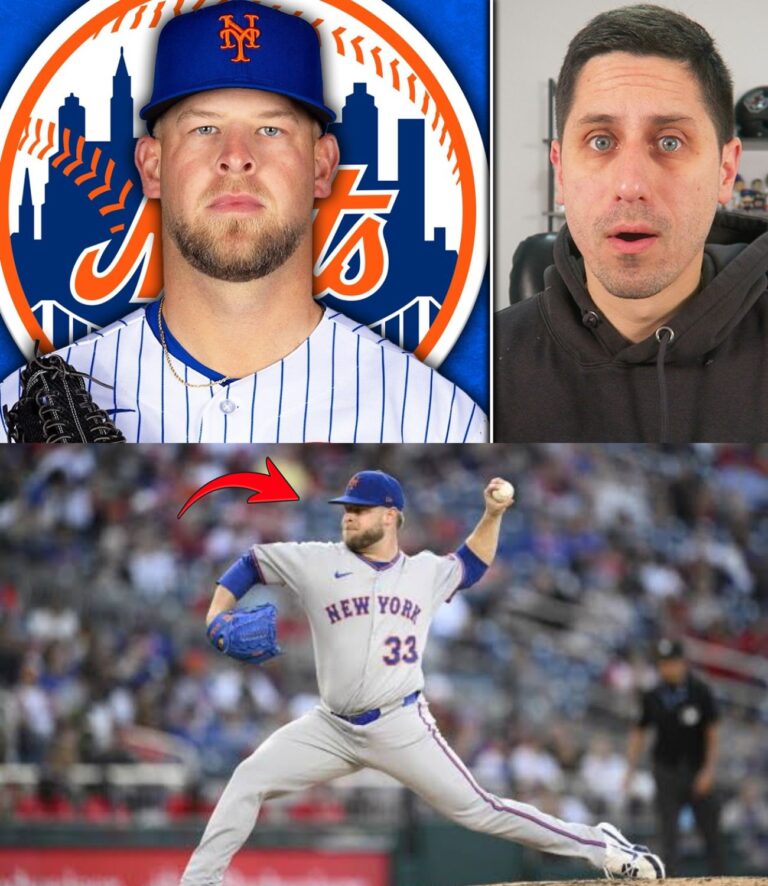
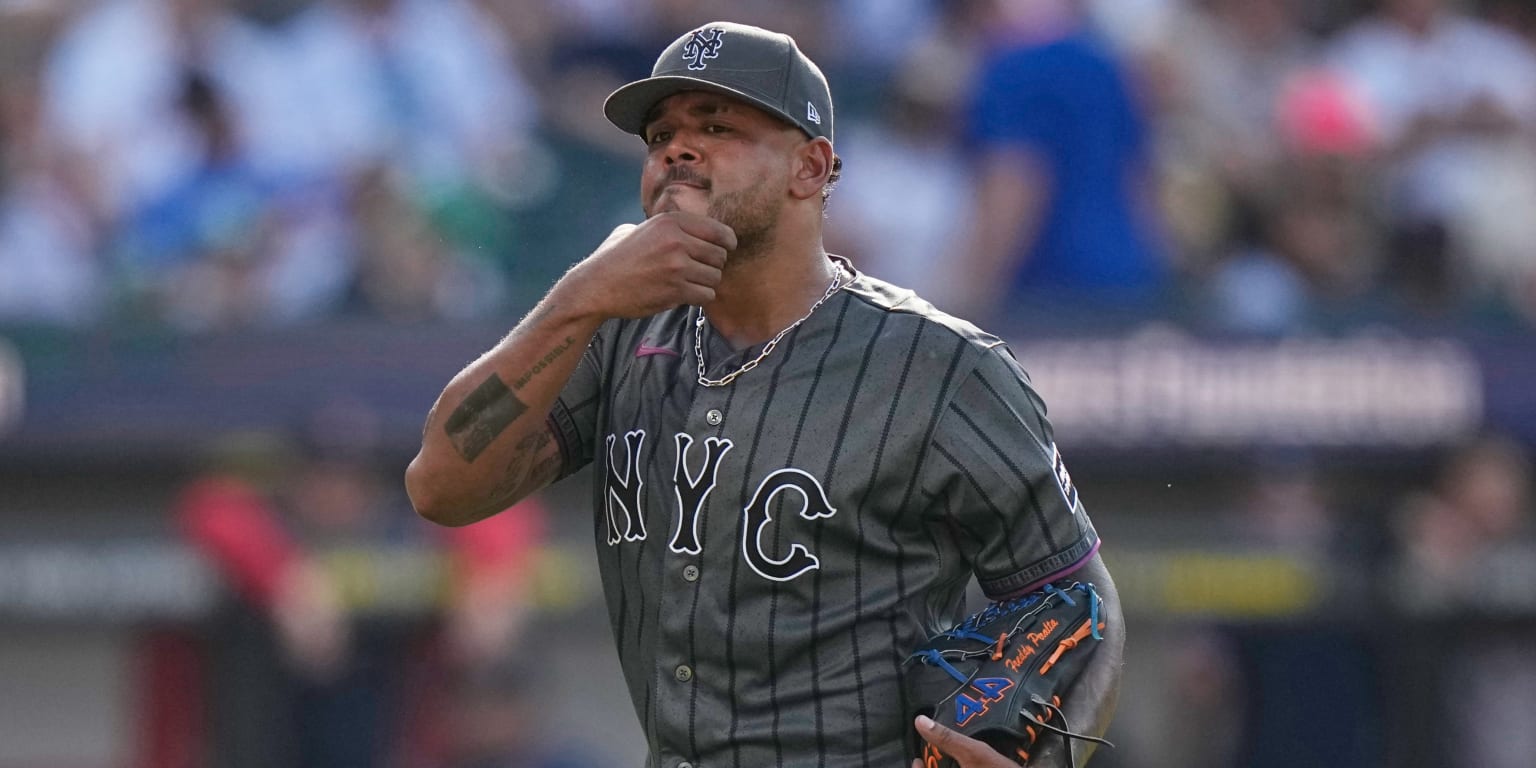
EW YORK — In a dramatic move that sent ripples across Major League Baseball just days before the trade deadline, the New York Mets officially scratched veteran right-hand pitcher Freddy Peralta from his scheduled start. What began as a swirl of clubhouse speculation has now crystallized into a high-stakes bidding war, with front office executives working tirelessly to finalize a deal that could reshape the franchise’s minor league system for years to come.
The decision to pull Peralta from the rotation and hand the ball to Kodai Senga is the clearest signal yet that President of Baseball Operations David Stearns has substantial, competitive offers on his desk. In the high-pressure cooker of deadline week, scratching a premier starting pitcher is rarely a precautionary measure; it is a tactical declaration that talks have crossed the threshold from exploratory dialogue into the final stages of negotiation.
The Strategic Masterstroke Behind the Scratch
For months, the New York Mets have operated under a bright spotlight, navigating a transitional season where every asset is evaluated for its long-term organizational yield. Peralta, despite enduring a roller-coaster campaign that has tested his resilience, remains one of the most coveted secondary pitching targets on the market. While Detroit Tigers ace Tarik Skubal commands an astronomical asking price of multiple top-tier minor league stars, Peralta represents an elite, high-upside alternative who can anchor a playoff rotation without requiring an organization to gut its entire prospect vault.
By removing Peralta from the mound against the Miami Marlins, Mets leadership made a shrewd risk-management decision. Sending a trade piece into competition on the eve of a deadline invites unnecessary jeopardy. A fluky line drive, a strained muscle, or even a subpar command outing could depress his market value overnight. Furthermore, the human element cannot be ignored. After his previous appearance, when reporters asked whether he believed he had thrown his final pitch in a Mets uniform, Peralta acknowledged the likelihood with sobering candor. Removing him from the lineup spares the veteran from competing under an excruciating microscope, allowing both the player and the organization to transition smoothly toward the impending move.
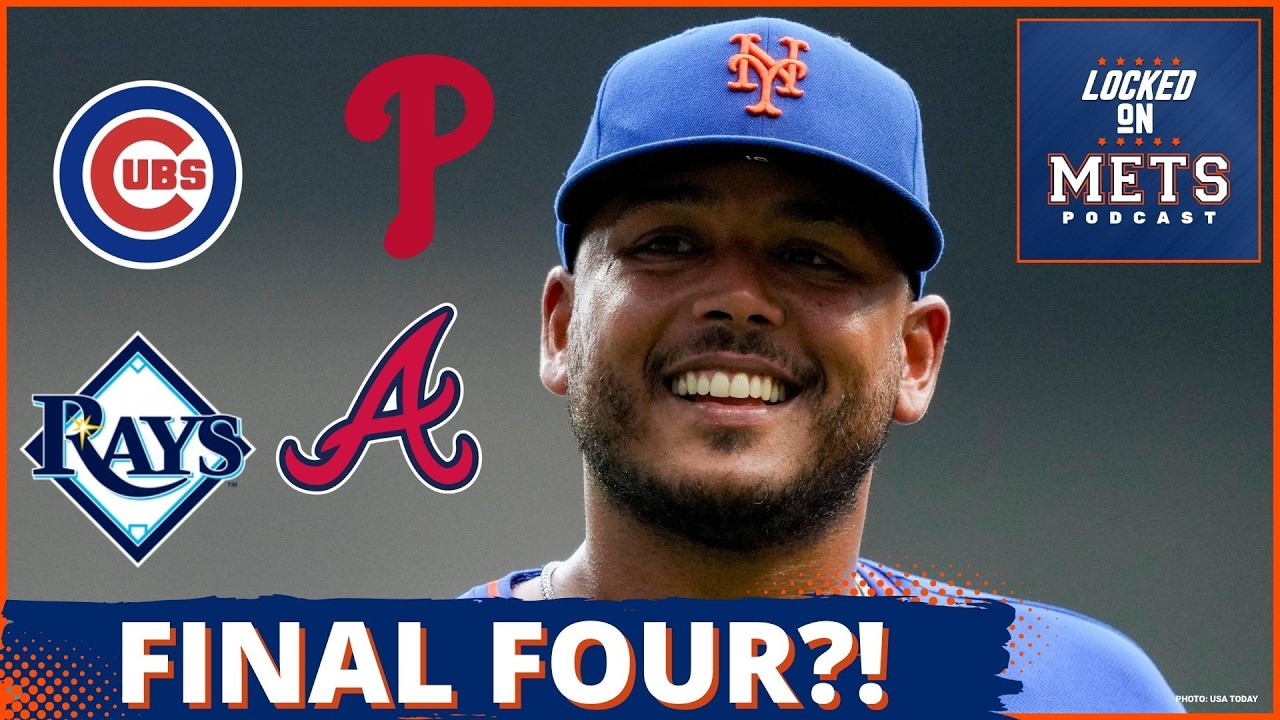
The Final Four: Contenders Locked in a Bidding War
As trade talks reach a crescendo, industry reporting has identified four primary finalists actively competing for Peralta’s services: the Tampa Bay Rays, the Chicago Cubs, the Atlanta Braves, and the Philadelphia Phillies. Each organization brings a distinct set of motivations, farm system strengths, and competitive pressures to the negotiating table.
The Tampa Bay Rays: A Deep Reservoir of Upside
The Tampa Bay Rays have built an industry-leading reputation for cultivating top-tier young talent, making their minor league system an ideal shopping ground for a Mets front office eager to replenish its ranks. Among the premier names entering trade dialogue is right-handed pitcher Brody Hopkins, currently showcasing electric repertoire at the Triple-A level. While Hopkins is still refining his command, scouts view his arm talent as frontline starting material—a developmental profile reminiscent of rising pitching talents across the league.
Tampa Bay’s depth also includes 19-year-old catching phenom Nathan Flewelling and middle infielder Cooper Fleming, a second-round draft choice who has demonstrated disciplined plate awareness and an impressive .848 OPS in Low-A this season. If the Mets demand a consensus top-hundred prospect paired with additional high-ceiling talent, Tampa Bay possesses the financial and minor-league flexibility to execute a blockbuster without flinching.
The Chicago Cubs: Familiar Ties and Defensive Structure
The Chicago Cubs have emerged as a formidable suitor, fueled by an intimate connection between Peralta and Cubs manager Craig Counsell. Having worked together previously, Counsell understands the mechanics and psychological demeanor required to unlock Peralta’s peak performance. Chicago’s front office also believes that their superior infield defense and sophisticated game-planning infrastructure can immediately optimize the right-hander’s effectiveness down the stretch.
From a return perspective, the Cubs boast enticing pieces. Outfielder Joshua Hartshorn and infielder Pedro Ramirez—who is currently gaining major league experience—represent elite young depth. Perhaps the most intriguing name for New York is high-velocity pitcher Jackson Wiggins. Having recently drafted his brother, Carson Wiggins, in the first round, the Mets have a unique opportunity to unite two hard-throwing siblings within their developmental pipeline. Adding a high-octane arm like Wiggins alongside a rising minor-league catcher such as Owen Ayers would constitute a resounding victory for the Mets’ scouting department.
The Division Rivals: Atlanta Braves and Philadelphia Phillies
While Tampa Bay and Chicago offer compelling farm packages, the presence of the Atlanta Braves and Philadelphia Phillies introduces an agonizing scenario for the Mets’ fanbase. Trading a capable veteran to a fierce National League East rival is a calculated gamble. The prospect of Peralta finding his rhythm and taking the mound at Citizens Bank Park or Truist Park during a pivotal October postseason series is a narrative New York would prefer to avoid.
Yet, if David Stearns prioritizes cold analytical value over emotional rivalry, both clubs hold assets worth considering. The Braves feature promising arms such as Cam Caminiti and JR Ritchie, alongside athletic outfielder Eric Hartman. Meanwhile, Philadelphia’s farm system is anchored by premier infield talent Aiden Miller—likely untouchable in a rental negotiation—and intriguing 22-year-old right-hander Gage Wood. For a deal to materialize within the division, New York would demand an undeniable premium to justify the inter-division risk.
The Collapsed White Sox Framework
Before negotiations narrowed to the four finalists, the Mets engaged in extensive discussions with the Chicago White Sox that nearly resulted in a completed deal. Inside reports indicate that New York and Chicago discussed a multi-player exchange centered on Peralta that would have brought outfield prospect George Wolkow and surging power-hitter Boston Smith to Queens.
The collapsed framework underscores New York’s primary deadline objective: acquiring raw, unadulterated slugging power. Wolkow, a 20-year-old outfielder with 15 home runs in High-A, offers significant physical projection. Boston Smith, meanwhile, has been nothing short of a revelation in his professional debut, boasting an OPS exceeding 1.000 while launching 22 home runs across three minor league stops. Though dialogue with Chicago stalled—potentially due to New York insisting on an established top-hundred asset or a third secondary prospect—the Mets’ aggressive pursuit of power hitters signals a clear organizational blueprint.
David Stearns’ Blueprint: Sluggers and Velocity
The Mets’ trade deadline strategy is no longer a mystery. Following their recent acquisition of prospect Billy Amick, the front office is systematically targeting offensive prospects who hit for elite power and pitchers who generate high-velocity swing-and-miss stuff. This philosophy is further evidenced by New York’s reported interest in Pittsburgh Pirates minor leaguers Murf Gray and Sammy Stafura—both of whom have demonstrated immense power displays in the lower minors this season.
With the trade clock ticking down, the Mets hold exceptional leverage. Because the organization possesses numerous attractive veteran trade chips—including bullpen standouts and rotational depth—much of the league’s pitching dialogue is funneling directly through Queens. Whether Peralta is traded to a Florida dome, the windy confines of Wrigley Field, or an NL East adversary, the return will set the trajectory for the next era of New York baseball. For Mets fans, the immediate present is filled with suspense, but the horizon has never looked more dynamic.